





RESUMEN
- Toquepala Mine was experiencing 24% screen plugging on competitor polyurethane panels, reducing effective open area and mill feed quality.
- The screen processed 1300 TPH with only 24% available open area, amplifying the impact of plugging.
- A media-only retrofit installed POLYDEX® MAXI panels with SVR apertures on the top deck and RUBBERDEX® panels with FXR formulation on the bottom deck.
- Plugging was reduced from 24% to 6.4%.
- Undersize throughput increased by 3%, stabilizing mill feed efficiency and power consumption.
When Screen Plugging Quietly Disrupts Mill Performance
In grinding circuits, effective open area directly influences classification efficiency and downstream grinding performance.
When plugging reduces available open area:
- Undersize flow is restricted
- Near-size material is misplaced
- More material reports to the mill than intended
- Energy demand increases
- Circuit stability declines
These effects may develop gradually and are not always obvious during routine operation. However, even moderate plugging percentages can create measurable performance losses in high-tonnage mill feed circuits.
This case demonstrates how restoring effective open area through media selection improved classification efficiency and mill performance.
The Challenge: Severe Plugging Limiting Classification Efficiency
Southern Peru’s Toquepala Mine operated a screen processing approximately 1300 TPH with 24% available open area.
The installed competitor polyurethane panels were severely plugging on both the top and bottom decks.
Operational impacts included:
- Excessive power use due to inefficient separation
- Reduced screening efficiency
- Frequent panel change-outs
- Reduced mill feed quality
Plugging levels had reached 24%, significantly reducing effective open area.
As open area decreased, undersize throughput declined and misplaced material entered the grinding circuit. The site required a solution that restored separation performance without modifying the screen structure.
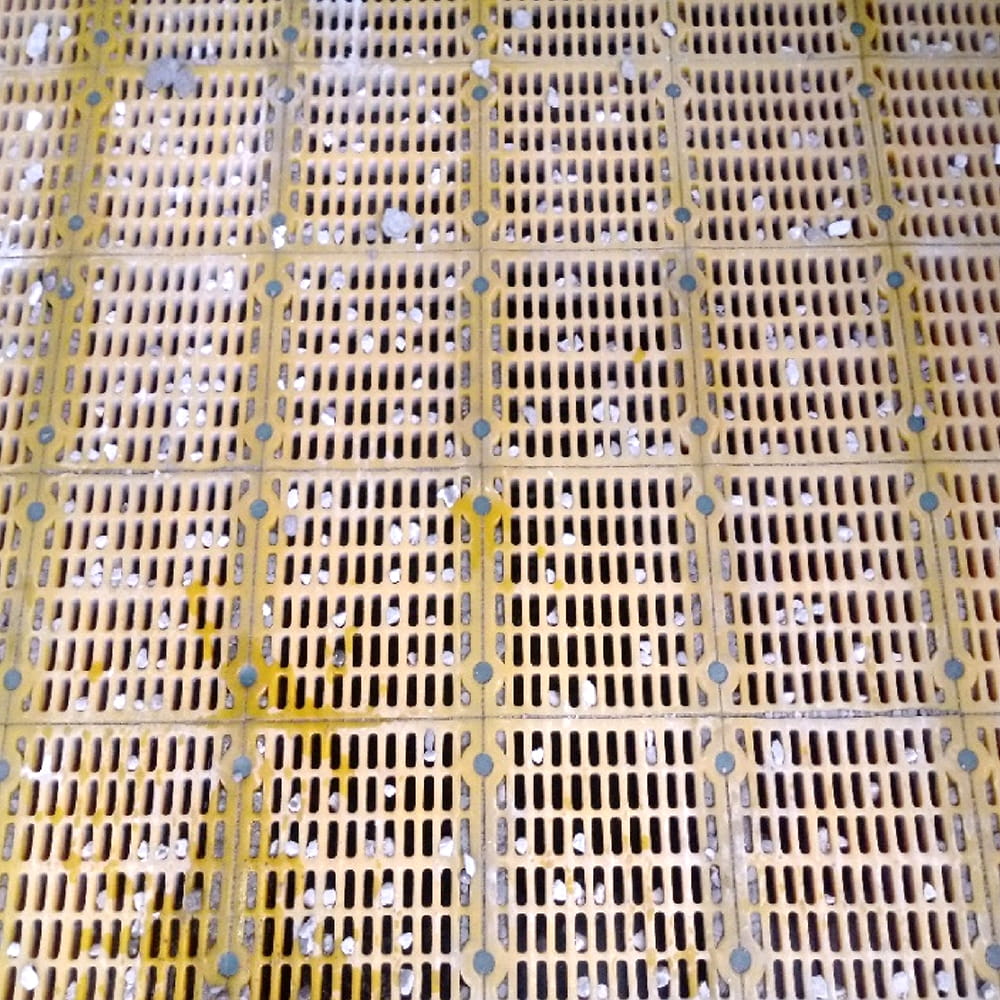
Top Deck with Competitor Panels

Bottom Deck with Competitor Panels
The Solution: Media Retrofit Focused on Aperture Performance and Material Behavior
With no structural concerns identified, the corrective action focused entirely on media configuration. This was a media-only retrofit. No changes were made to frames, stringers, or support components. The objective was to reduce plugging while maintaining open area and improving stratification.
Top Deck Configuration
Installed POLYDEX® MAXI panels with SVR apertures.
Purpose:
- Reduce near-size lodging
- Improve particle orientation and stratification
- Minimize top-deck plugging
The SVR aperture geometry promotes consistent material movement and reduces the likelihood of particles seating within the opening under high-throughput conditions.
Bottom Deck Configuration
Installed RUBBERDEX® panels with FXR rubber formulation.
Purpose:
- Increase flexibility under dynamic load
- Improve particle release
- Maintain effective open area over time
The FXR rubber formulation provides greater deflection characteristics than conventional polyurethane, supporting aperture clearing during operation.
Together, the deck configurations addressed both stratification efficiency and aperture retention performance.
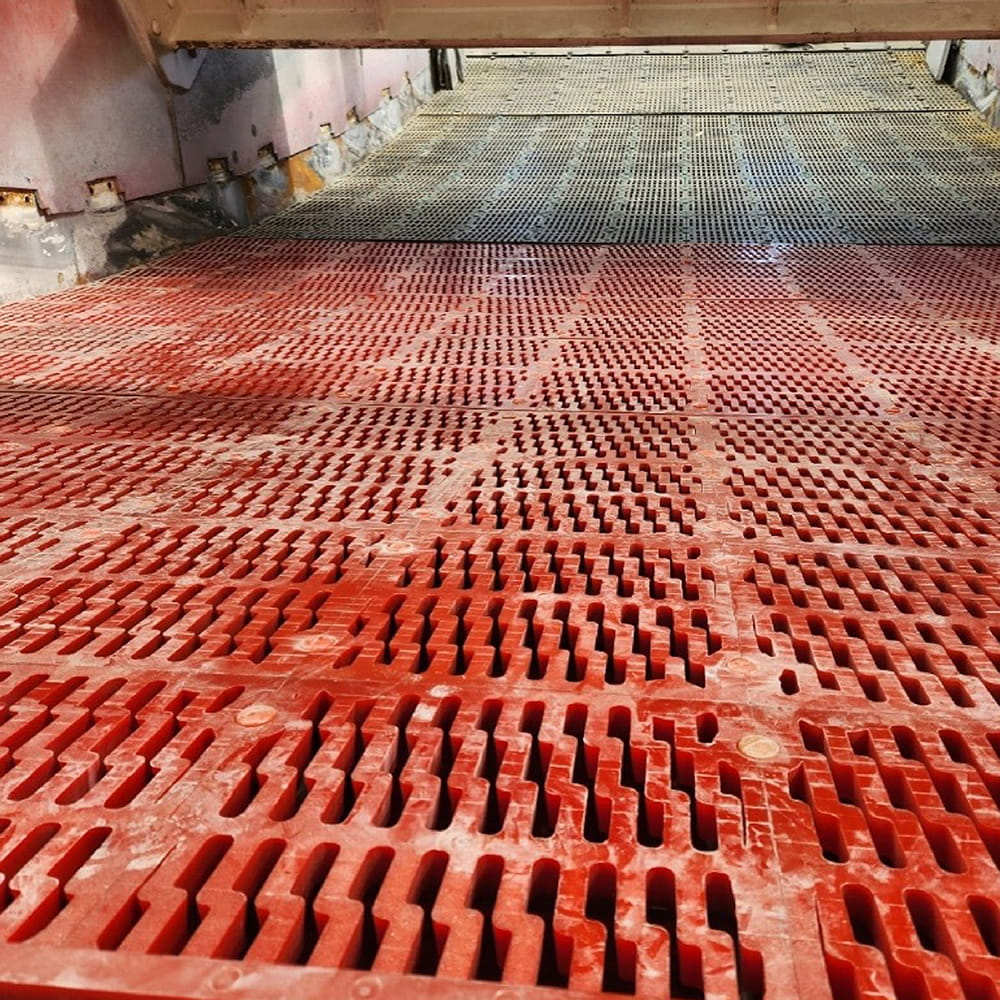
Installed POLYDEX MAXI Panels with SVR apertures to minimize plugging and improve stratification.
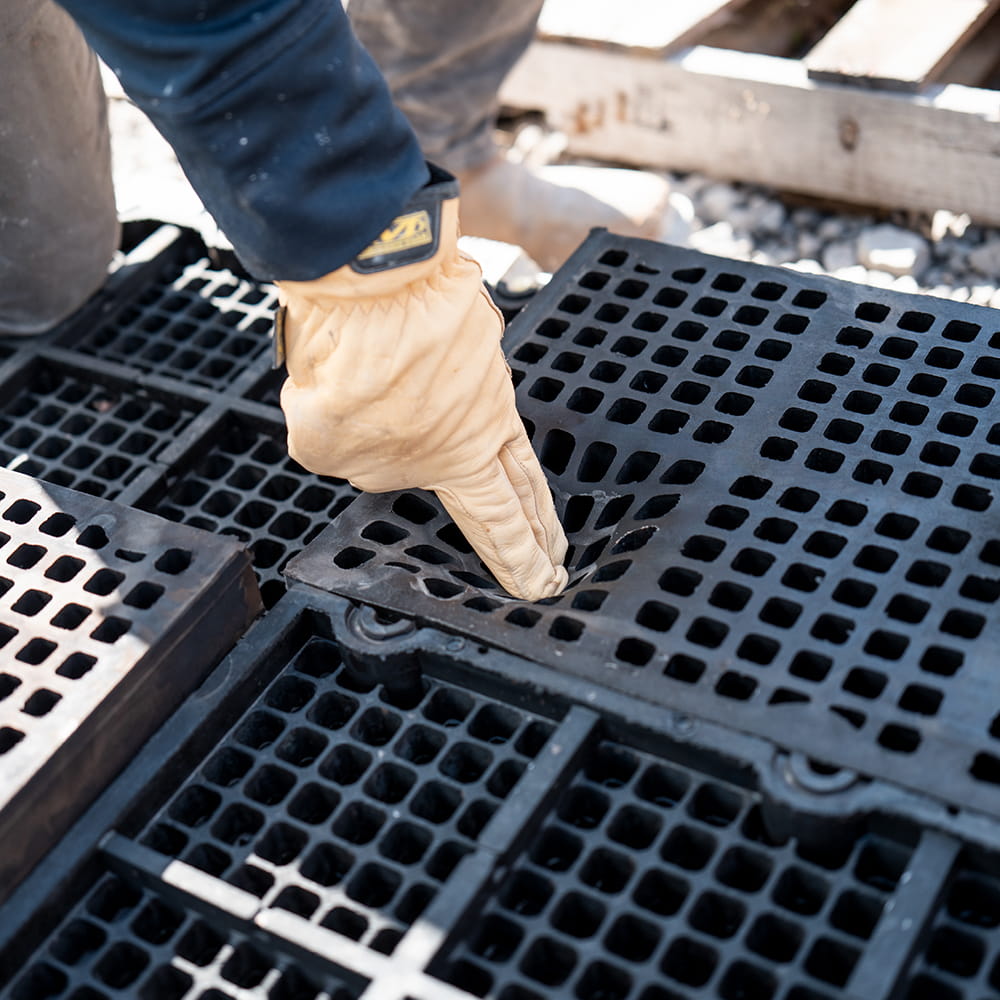
Installed RUBBERDEX panels with FXR rubber formulation to further reduce plugging and maintain open area.
The Results: Reduced Plugging and Increased Undersize Throughput
Post-installation performance data confirmed measurable improvement.
Los resultados principales incluyeron:
- Plugging reduced from 24% to 6.4%
- 3% increase in undersize throughput
- Improved screening efficiency
- Reduced misplaced undersize reporting to the mill
- More stable and even power consumption
- Restoring effective open area improved separation efficiency and reduced the grinding circuit’s exposure to misplaced material.
- No structural conversion or equipment replacement was required.
Por qué funcionó
The performance limitation was caused by loss of effective open area due to plugging.
The corrective strategy addressed two performance variables:
Aperture Geometry
SVR apertures improved particle movement and reduced near-size lodging during initial stratification.
Media Flexibility
The FXR rubber formulation increased dynamic deflection, allowing trapped particles to release more effectively under operating conditions.
By improving both particle flow and aperture clearing behavior, the screen regained classification efficiency. The downstream impact was more consistent mill feed and improved circuit stability.
Preguntas frecuentes
How does screen plugging affect mill feed efficiency?
When screen media plugs, effective open area decreases. This restricts undersize passage and increases the likelihood of misplaced material reporting to the mill. The grinding circuit then processes material outside its intended size range, increasing energy demand and reducing overall efficiency. Even moderate plugging percentages can create measurable performance losses in high-throughput mill feed applications.
 Español de Chile
  English
  Português do Brasil