






RESUMEN
- Nugent Sand & Gravel, un productor de Kentucky que descarga entre 15 y 20 barcazas al día, tenía problemas con el desgaste severo de las tolvas y las reparaciones constantes.
- Años de parches soldados con placas AR crearon bordes afilados, riesgos para la seguridad y frecuentes paradas por mantenimiento.
- Polydeck instaló 2″ PROTEX® RL Revestimientos de caucho en paneles modulares de 1×1 y 1×2 pies para sustituir los parches de acero.
- Los revestimientos atornillados eliminaron la soldadura, simplificaron el mantenimiento y proporcionaron una superficie de desgaste uniforme.
- La frecuencia de mantenimiento disminuyó drásticamente, las inspecciones se volvieron poco frecuentes y PROTEX® RL posteriormente se estandarizó en toda la planta.
El costo oculto de las reparaciones con parches
En operaciones con grandes volúmenes de arena y grava, las tolvas receptoras absorben el impacto constante del flujo de materiales pesados. Una forma habitual de gestionar este desgaste es soldar parches de acero sobre las zonas dañadas. Aunque es eficaz a corto plazo, los parches repetidos suelen provocar superficies irregulares, mayores riesgos de seguridad y un ciclo de mantenimiento que se vuelve cada vez más disruptivo con el tiempo.
A medida que aumentan las exigencias de producción, estos métodos de reparación tradicionales pueden provocar silenciosamente tiempos de inactividad, exposición de la mano de obra e ineficiencia, lo que lleva a muchos operadores a reconsiderar cómo gestionan el desgaste en las zonas de alto impacto.
El reto: un ciclo reactivo de reparación de tolvas
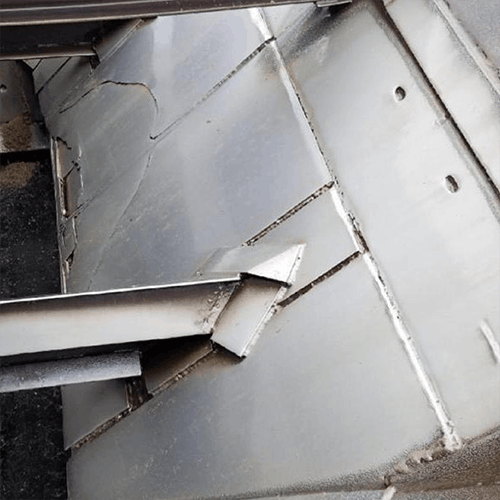
En Nugent Sand & Gravel, la soldadura repetida se había convertido en la respuesta habitual al desgaste de las tolvas. Con el tiempo, este enfoque generó nuevas preocupaciones operativas y de seguridad.
- Acumulación de placas AR en capas creó superficies interiores irregulares y dentadas
- Soldadura y corte frecuentes aumento del tiempo de inactividad y la exposición de los trabajadores
- Bordes afilados planteaban riesgos para la seguridad durante las inspecciones y el mantenimiento.
- Patrones de desgaste irregulares aceleró la necesidad de reparaciones adicionales
Lo que comenzó como un mantenimiento rutinario se había convertido en un ciclo de parches constantes con rendimientos cada vez menores.
La solución: revestimientos modulares de caucho sin trabajos en caliente
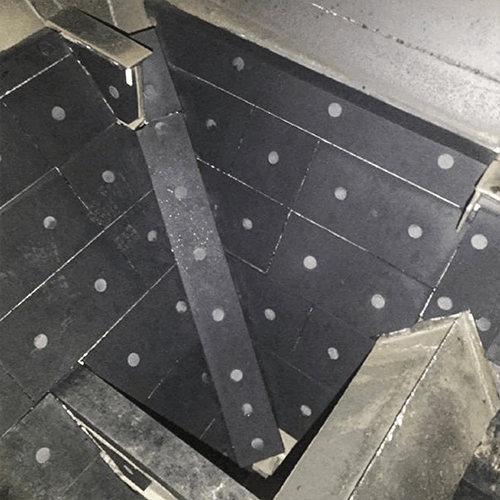
Para romper ese ciclo, Polydeck recomendó 2″ Revestimientos de caucho PROTEX® RL, un sistema de revestimiento modular atornillable diseñado para absorber impactos y eliminar la necesidad de soldaduras.
- Instalado 1×1 pie y 1×2 pies Revestimientos PROTEX® RL en la tolva receptora
- Forros cortados a medida in situ para adaptarse a la geometría de la tolva
- Instalación atornillada eliminación de soldaduras y trabajos en caliente
- Creado un Superficie de desgaste uniforme y con absorción de impactos. a través de la tolva
¿Sabías que...?
PROTEX® RL proporciona una forma rápida y segura de proteger tolvas, conductos y puntos de transferencia, lo que reduce el tiempo de inactividad y prolonga la vida útil sin necesidad de soldar ni cortar.

Los resultados: reducción drástica de la frecuencia de mantenimiento
El impacto del cambio fue inmediato. Las inspecciones que antes se realizaban semanalmente pasaron a ser mensuales y, con el tiempo, tan poco frecuentes que casi se olvidaron. Animada por los resultados, Nugent Sand & Gravel amplió la solución a toda la planta.
- El tiempo de inactividad por mantenimiento se redujo considerablemente., eliminando las constantes reparaciones con parches.
- Mayor vida útil mayor confiabilidad y tiempo de actividad
- Disminución de la frecuencia de las inspecciones de semanal a rara vez necesario
- PROTEX® RL adoptado en toda la planta en múltiples zonas de desgaste
- Toboganes rediseñados alrededor de los módulos de revestimiento estándar para facilitar su sustitución
Por qué funcionó: absorción de impactos y gestión estandarizada del desgaste.
El éxito se debió a que se abordaron tanto la mecánica del desgaste como las prácticas de mantenimiento.
- Los revestimientos de caucho absorbieron la energía del impacto., reduciendo el desgaste por abrasión.
- Paneles modulares reemplazos y planificación simplificados
- Tallas estandarizadas mayor consistencia en toda la planta
- Eliminación del trabajo en caliente mayor seguridad y menor tiempo de inactividad
Al sustituir las reparaciones reactivas por una estrategia proactiva de revestimiento, Nugent Sand & Gravel logró una mayor vida útil y un programa de mantenimiento más predecible.
Preguntas frecuentes
¿Cómo se comparan los revestimientos de caucho como PROTEX® RL con las placas AR soldadas en aplicaciones de alto impacto?
Los revestimientos de caucho absorben y distribuyen la energía del impacto en lugar de transmitirla a través del acero. Esto reduce el desgaste por abrasión y la fatiga del metal, al tiempo que elimina la necesidad de soldar, lo que hace que el mantenimiento sea más seguro, rápido y mucho menos frecuente.
 Español de Chile
  English
  Português do Brasil