






SUMMARY
-
- Wet-screening applications require more than a durable screen surface.
- For many wet-screening applications, polyurethane is often the strongest starting point.
- Formulation matters because wet-duty conditions can change wear life, how well the openings stay clear, and long-term durability.
- Aperture design matters because drainage, self-cleaning behavior, and near-size plugging are major parts of wet-screen performance.
- The best answer is not always the cheapest or most familiar replacement. It is the media strategy that keeps the deck open, drains efficiently, and supports throughput.
What Counts as a Wet-Screening Application?
A wet-screening application is any screening process where moisture or water significantly affects how the feed material behaves on the deck. That can include wash screens, slurry-heavy applications, high-moisture feed, sticky or clay-bound material, and other screening applications that use water to improve drainage or combat buildup.
In these conditions, the challenge isn’t just separating material by size, but keeping the screen surface open enough and water moving efficiently enough to keep the process moving. Wet screening shouldn’t be treated as a minor variation of dry screening. Once water becomes part of the process, media selection becomes a different conversation.
Why Wet Screening Changes Media Selection
Water is often introduced to help material pass and reduce the sticking conditions that can lead to blinding. Once water is part of the process, media selection shifts toward drainage, keeping apertures clear, wear life, and throughput stability.
Wet screening changes how fines move across the deck, how quickly openings clear, how much usable open area the deck retains, and how long a panel lasts in service. In some applications, long-term exposure to water can also increase the importance of hydrolysis resistance or microbial durability.
Therefore, the best media for wet screening isn’t simply the one with the highest open area or the lowest upfront cost; it’s the one that can stay productive under wet conditions while supporting drainage, wear life, and stable throughput.
What Is the Best Screening Media for Wet Screening?
For many wet-screening applications, polyurethane is the best place to start. That isn’t because one material automatically outperforms every alternative in every wet application; it’s because wet screening usually places several performance demands on the media at the same time: drainage, wear life, open apertures, and consistent throughput. Polyurethane is often a strong starting point when those priorities need to be balanced together.
That isn’t to say that polyurethane is always the answer. Some applications may still call for rubber, and certain drainage-focused applications may be better served by wire. But in many wet-screening situations, polyurethane is the most versatile first direction to evaluate.
Why Polyurethane Is Often the Strongest Starting Point
Polyurethane is often a strong wet-screening material because it can be engineered around the conditions wet screens typically have to manage.
In wet applications, media performance isn’t just about resisting wear. It’s also about how well the deck maintains usable open area, how efficiently water leaves the surface, and how consistently the media performs under continuous moisture exposure. Different polyurethane formulations can be designed to handle those priorities differently, which makes polyurethane a useful starting point when the plant is trying to improve overall wet-screen performance instead of solving only one isolated problem.
That broader range of factors matters because wet screening isn’t a single condition. Some plants need better drainage. Some need more anti-plugging measures. Some need better wear-focused performance. Some need better long-term resistance to microbial degradation. Polyurethane is often the best place to begin because it gives plants a flexible material platform for working through those different wet-duty requirements.
Why Formulation Matters in Wet Screening
In wet screening, the base media material alone doesn’t tell the full story. Formulation can be just as important as the material family itself.
A balanced polyurethane formulation may work well in general duty, but abrasive wet feed or wash-screen conditions may need a more wear-focused formulation. A screen that struggles with buildup or limited opening recovery may benefit from a more elastic formulation that helps create self-cleaning secondary motion. A deck that runs continuously in wet service may need better protection against hydrolysis or microbial breakdown.
This is one of the biggest mistakes plants make in replacement decisions: they replace the surface with the same basic material and assume the problem is solved. In reality, the better answer may be the same material family but a more application-specific formulation.
Which Aperture Designs Matter Most in Wet Screening?
Aperture design is a major part of wet-screening success because drainage and plugging behavior are directly tied to how the opening is shaped and oriented.
- Slotted apertures can improve drain rates depending on orientation and application.
- Continuous slot designs can support rapid water removal in wet applications where flow-through drainage matters.
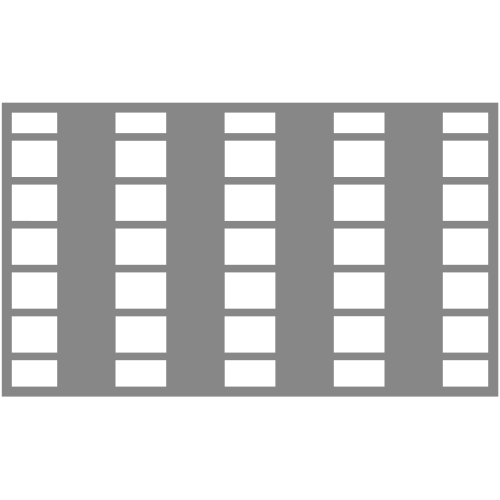
- VST designs are engineered to improve drain rates while minimizing plugging and helping keep openings cleaner, especially in dewatering or recovery applications.
- VR and HVR styles can help introduce self-cleaning behavior in plugging-prone conditions.
The role of the aperture is why the best screen media for wet screening should never be chosen by material alone. A plant may choose the right polyurethane formulation and still underperform if the aperture profile is not helping water leave the deck or allowing near-size material to clear effectively.
| Wet-Screening Aperture Guide | |||
|---|---|---|---|
| Aperture Style | Best For | Main Benefit | Common Issue Addressed |
| Slotted | Drainage-focused screening | Improved water removal | Slow drainage |
| Continuous Slot | Flow-through wet applications | Rapid drainage | High water volume |
| VST | Dewatering and recovery duty | Improved drain rates with cleaner openings | Drainage plus plugging |
| VR/HVR | Plugging-prone wet screening | Self-cleaning behavior | Near-size plugging |
How to Improve Drainage in Wet Screening
Drainage is another major part of wet-screen performance because excess water can slow material movement, carry fines differently, and reduce effective throughput if it’s not removed efficiently.
Improving drainage often means evaluating aperture orientation, slot style, open-area strategy, and whether the media is helping water leave the deck instead of trapping it. In some applications, the best-performing wet-screen media is the one that allows water to escape quickly while still maintaining the necessary sizing control.
This is where wet-screen media selection becomes more technical than a simple material comparison. A good wet-screening surface must balance drainage, wear life, and separation performance at the same time.
When Rubber or Wire May Still Be Considered
Although polyurethane is often the strongest starting point for wet screening, there are select applications where other options may still be considered.
Rubber may still have a role in certain severe-duty wet conditions where impact, durability, and wear life outweigh the need for a more drainage-focused surface. But in most wet-screening applications, rubber is not the default starting point.
Wire should be considered more selectively in wet screening. In Polydeck’s lineup, the key wire option for these applications is METALDEX PRO. It’s used where profile wire would typically be used and is most relevant when enhanced drainage is one of the primary performance requirements.
So rather than treating wire as a broad wet-screening recommendation, it’s more accurate to think of METALDEX PRO as a specialized option for applications where profile-wire-style flow-through drainage is the real need.
| Wet-Screening Media Comparison | |||
|---|---|---|---|
| Media Type | Best Wet-Screen Role | Main Strength | Key Caution |
| Polyurethane | Best starting point for most wet-screening applications | Balances drainage, wear life, self-cleaning behavior, and formulation-specific performance | Must be matched with the correct formulation and aperture design |
| Rubber | Selective severe-duty wet applications where impact and wear life dominate | Handles harsh-duty applications where durability matters more than drainage performance | Not the default choice for most wet-screening applications |
| METALDEX PRO | Specialized drainage-focused applications where profile-wire-style flow-through performance is the priority | Supports enhanced drainage in applications typically suited for profile wire | Not a broad wet-screening recommendation like polyurethane |
How to Evaluate Wet-Screen Media Performance
A practical wet-screening evaluation should consider:
- The amount of water or moisture affecting the feed
- Whether the main problem is plugging, buildup, wear, or drainage
- The presence of clay, sticky fines, or near-size material
- Whether the application needs more self-cleaning behavior
- Whether long-term wet exposure makes hydrolysis or microbial resistance important
- How much downtime the current replacement strategy creates
When recurring wet-screen problems continue, a broader screen performance evaluation or Polydeck Plant Survey can help determine whether the issue is the media itself or the overall screening setup.
Like-for-like replacement can feel safe, but it often repeats the same wet-screening limitations. If the deck keeps plugging, draining poorly, losing throughput, or wearing too quickly, it’s usually a sign the media strategy needs to change.
Signs Your Current Wet-Screen Media Is the Wrong Fit
Plants should take a closer look at their wet-screen media strategy when they see:
- Frequent plugging or blocked openings
- Slow drainage
- Material buildup on the surface
- Loss of throughput during wet conditions
- Short service life in wash-screen duty
- Inconsistent sizing caused by blocked or overloaded openings
- Repeated replacement without a lasting improvement
When those symptoms show up repeatedly, the issue may involve formulation, aperture design, panel engineering, or overall deck behavior rather than media material alone.
Real-World Results in Wet Screening Conditions
Wet-screening improvements are often measured in more than wear life alone. They show up in cleaner openings, better drainage, fewer interruptions, and more stable throughput.
At Stoneway Sumner, Polydeck helped address plugging and wet-screen performance constraints while supporting a major increase in production. That kind of result reinforces the larger point: in wet screening, the right media strategy can change the performance of the whole operation, not just the life of one panel.
How Polydeck Approaches Wet-Screen Media Selection
A strong recommendation starts with understanding what the water is actually doing to the process. That includes how the feed material is behaving on the deck, whether buildup is forming, how quickly water is draining, where plugging is occurring, and whether the current media is losing performance before it’s fully worn out.
From there, the question is not just whether the next surface should be polyurethane, rubber, or wire, but which combination of formulation, aperture design, panel engineering, and support strategy best fits the wet-screening conditions the plant is actually facing.
That broader view helps plants move beyond repeated like-for-like replacement and toward a wet-screen media strategy that better supports drainage, buildup control, wear life, and uptime.
 English
  Español de Chile
  Português do Brasil