





SUMMARY
-
- Published open-area percentages of wire cloth do not always reflect the screening area available to the material in operation.
- Side-tension wire cloth can lose tension, develop localized wear, or distort before a full sheet visibly fails.
- A small failure in a tensioned sheet can require a full-sheet changeout, while modular systems can isolate replacement to the affected area.
- For dry, high-impact aggregate applications, modular wire media can offer a way to retain wire-cloth-level throughput while improving wear life and changeout efficiency.
What Is the Difference Between Wire Cloth and Modular Screen Media?
Wire cloth is installed as a large, side-tensioned sheet over a crowned screen deck. Clamp rails, tensioning hardware, overlaps, and support bars are part of the system that holds the cloth in place and allows it to operate under tension.
Modular screen media uses smaller, replaceable panels installed across a flat deck support system. Those panels can be made from wire, polyurethane, rubber, or a hybrid construction. The mounting system, panel size, material, aperture design, and deck support structure all affect how the screen performs.
The distinction between the two matters because it is not a simple material comparison. A modular wire panel can preserve the open area operators value in wire media while changing how the deck is supported, how material is distributed, and how maintenance is performed.
| Wire Cloth vs. Modular Wire Panels: Comparison at a Glance | ||
|---|---|---|
| Comparison Point | Side-Tension Wire Cloth | Modular Wire Panels |
| Screening surface | Large, tensioned wire sheet over a crowned deck | Smaller replaceable wire panels installed in a flat modular support system |
| Maintenance scope | A local failure can require replacement of a larger continuous sheet. | Replacement can be focused on the panel or zone that needs attention. |
| System factors | Tensioning hardware, supports, overlaps, and crown geometry are part of the installed setup. | Panel size, mounting system, support structure, and deck layout are part of the installed setup. |
Tradeoff 1: Nominal Open Area vs. Usable Screening Area
Wire cloth is widely valued for its open area. Thin wires can create a high percentage of openings relative to the total cloth surface, supporting high material flow.
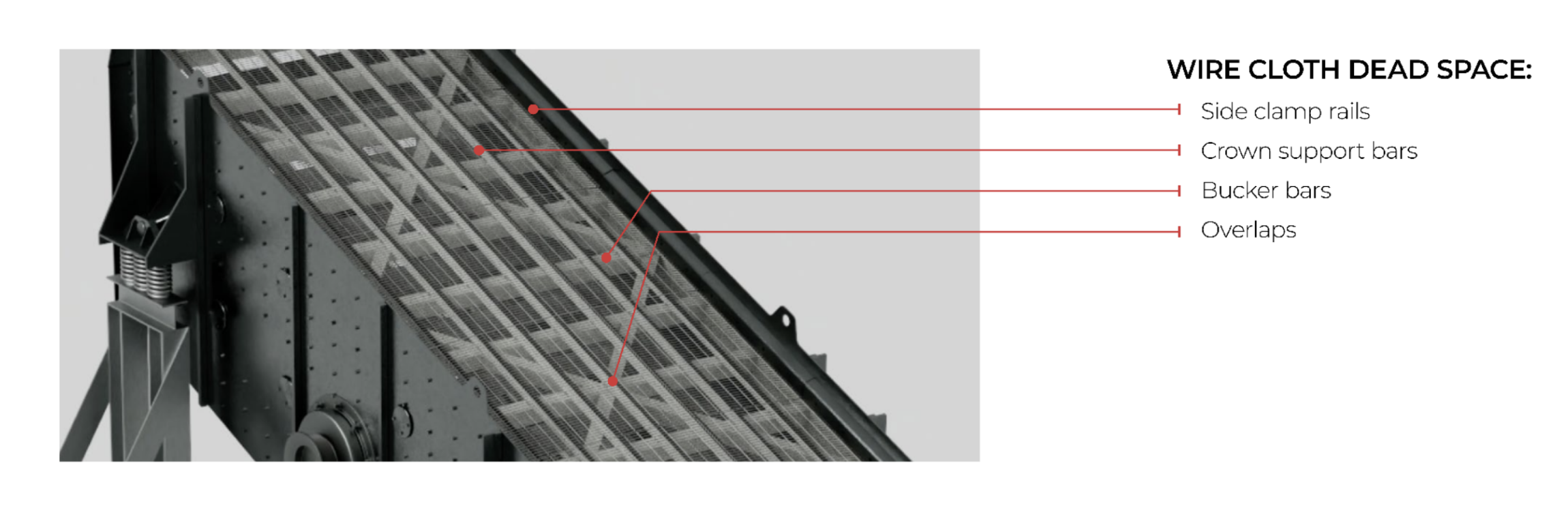
However, a published open-area percentage describes the cloth itself. It does not necessarily account for the portions of the installed deck occupied by clamp rails, crown bars, center hold-downs, overlaps, or other support hardware. Those areas do not screen material.
Screen-surface shape also affects material distribution. On a crowned deck, the screening surface rises through the center. Under vibration and gravity, material can migrate from the elevated center toward the lower sides. This can make the material bed shallower through the center and deeper along the edges, leaving some screening area underused while concentrating load and wear elsewhere. A flat modular system starts with an even screening surface across the deck width. It does not automatically guarantee even distribution, but it removes crown geometry as a contributor to sideward material movement.
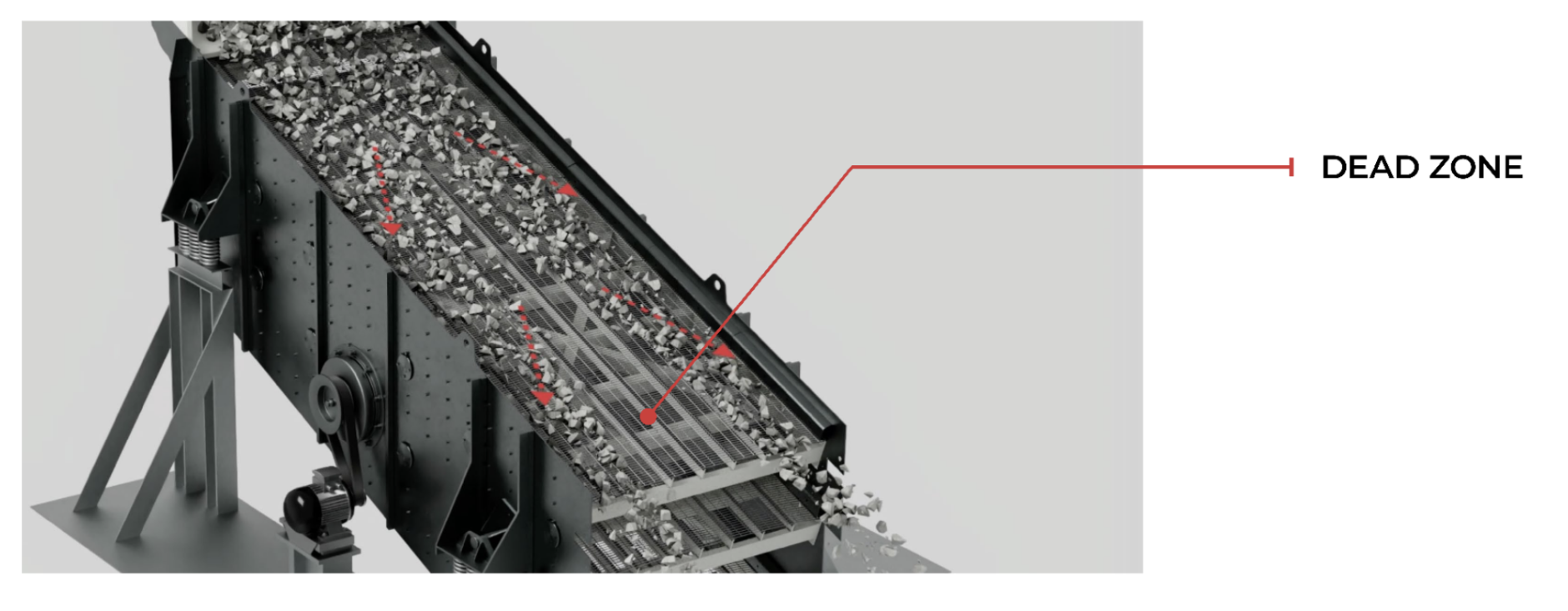
A comparison should account for usable screening area, material distribution, bed depth, and material contact with the screening surface, not nominal open area alone. To understand how these factors relate in the process of screening, see How Does Screening Work?
Tradeoff 2: Performance Can Change Before a Sheet Fails
A wire-cloth sheet does not need to have widespread breakage before its performance changes. Over time, tension can decline, openings can distort, localized wear can develop, and individual areas can begin to plug, peg, or flex differently from the rest of the deck.
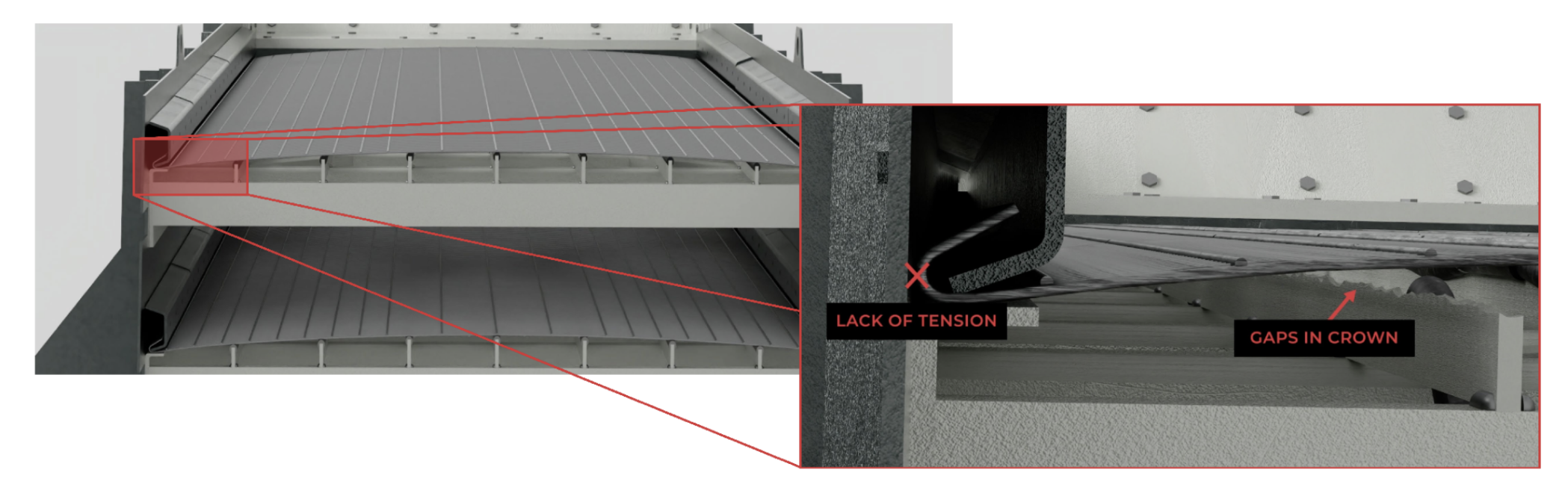
These conditions can reduce usable open area and make separation less consistent. Depending on the application, the plant may see product-quality drift, more carryover, reduced throughput, or a growing need for operating adjustments before the sheet reaches an obvious end of life.
Signs worth inspecting include:
- Rounded or distorted aperture edges
- Localized plugging or pegging
- Isolated broken wires or areas of accelerated wear
- Loose or flapping sections between supports
- Uneven material travel or unstable bed depth
- Product-quality, separation-efficiency, or throughput changes that require repeated correction
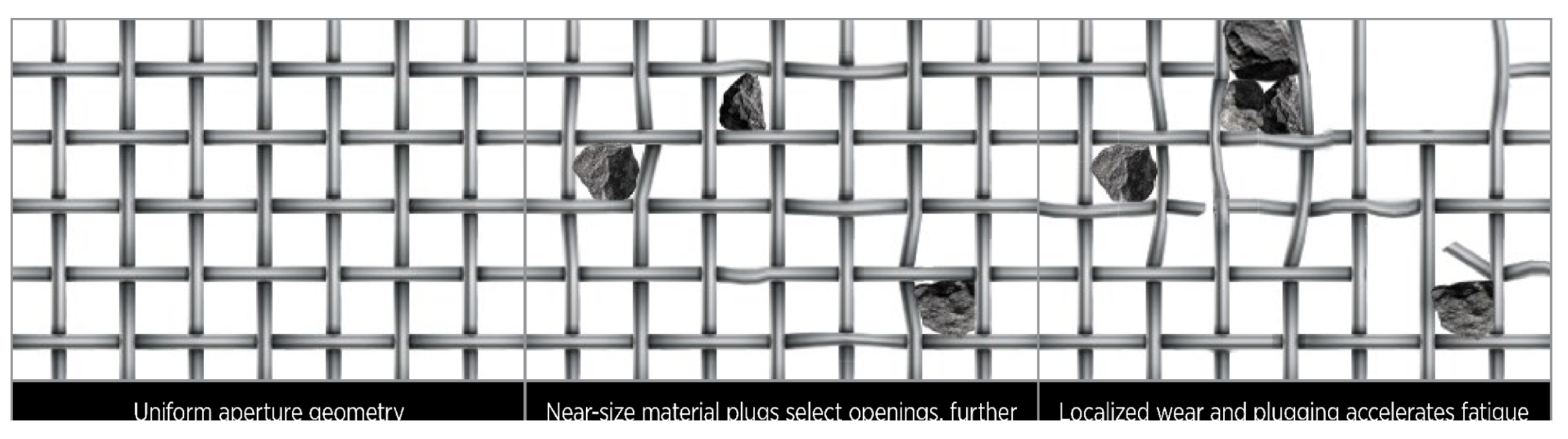
Not every one of these conditions originates with the wire cloth itself. Feed presentation, screen motion, support condition, tensioning hardware, and material characteristics can all contribute. The key is to investigate the pattern before replacing the same wire specification or changing media without addressing the underlying condition.
Tradeoff 3: Low Purchase Price vs. Total Maintenance Cost
Wire cloth can be economical to purchase and easy to source, initially. For many applications, those advantages remain meaningful.
The total cost changes when a local failure requires a full-sheet replacement. A small break, damaged section, or loss of tension can force the plant to remove a much larger piece of media than the affected area alone. That can mean more labor, more downtime, and replacement of screening surface that still appears usable.
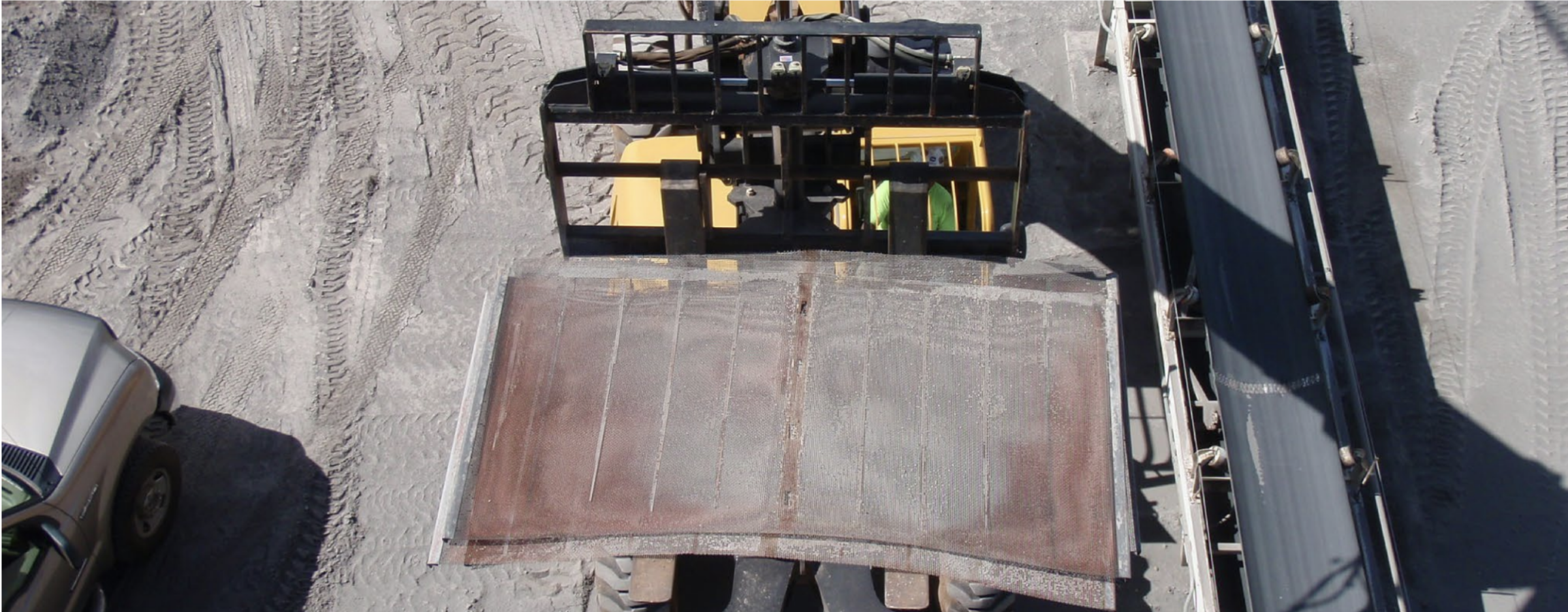
Modular systems approach maintenance differently. Because the screening surface is divided into smaller panels, the plant can replace the panel or zone that has reached the end of its useful life without necessarily changing the entire deck section. That can be especially valuable where impact, abrasion, or loading is concentrated in predictable zones.
Inventory also deserves consideration. Side-tension wire cloth often requires spare sheets for each opening and deck configuration. Modular systems can still require spares, but standardized panel sizes and zone-specific replacements may reduce the amount of full-deck inventory a plant needs to hold.
The right comparison is not purchase price alone. It is the combined cost of media, labor, downtime, inventory, and lost production across the operating cycle.
When Wire Cloth May Still Be the Right Choice
Wire cloth remains a practical solution in some applications, especially when low initial cost, a specific opening configuration, and established side-tension infrastructure are the primary considerations.
The purpose of this comparison is not to suggest that wire cloth is always the wrong answer. It is to help plants identify when the familiar solution is creating a tradeoff they no longer want to accept.
A plant should consider a modular alternative when it repeatedly experiences:
- Full-sheet changeouts caused by localized damage
- Lost throughput despite high nominal open area
- Wear concentrated in specific lanes or deck zones
- Frequent tensioning, maintenance, or product-quality adjustments
- High labor or downtime costs associated with wire-cloth replacement
- A need to combine high open area with more targeted replacement and maintenance
Where Modular Wire Media Fits
For plants that value the open area of wire cloth but need a more durable, maintainable setup, modular wire panels can be a useful alternative. They are not the same as conventional polyurethane or rubber panels, and they should be evaluated against the full application.
METALDEX XPT is Polydeck’s modular welded-wire option for dry, high-impact aggregate screening applications. It combines welded wire made from wear-resistant steel with reinforced polyurethane borders in 1-foot by 2-foot modular panels.
Its purpose is to retain the open area operators value in wire cloth while changing how the screening surface is supported and maintained. Because the panels are modular, maintenance can focus on the area that needs attention rather than requiring a full-sheet replacement.
This approach is most relevant when a plant is dealing with concentrated impact or wear, recurring full-sheet changeouts, or downtime associated with replacing large side-tension wire sections.
How to Evaluate the Right Option for Your Screen
Before changing from wire cloth to a modular system, review both your media and screening setup:
- Map the wear pattern. Identify whether damage is concentrated at the feed end, in a specific lane, around supports, or across the full deck.
- Observe material distribution. Check whether material spreads across the available deck width or concentrates in a narrow path.
- Review usable screening area. Consider deck hardware, support structure, opening geometry, blinding or pegging, and actual material exposure to apertures.
- Compare replacement implications. Track changeout time, labor, downtime, and spare-inventory needs to determine whether localized modular replacement would offer a practical maintenance advantage over full-sheet wire-cloth replacement.
- Match media by zone. Feed, active screening, and discharge zones may need different priorities for impact resistance, aperture behavior, open area, and wear life.
- Evaluate screen operation. Confirm that screen motion, bed depth, feed presentation, and support condition are appropriate before attributing every problem to the media.
When recurring wear, throughput, or separation-efficiency problems remain unclear, a PRO ANALYSIS: Screen Performance Evaluation can help assess vibrating-screen health, screen motion, material distribution, support-structure movement, and other operating conditions that influence media performance.
Frequently Asked Questions
The answer depends on the specific product and application. This article focuses on METALDEX XPT in dry, high-impact aggregate screening applications. Other wire-media designs, including profile-wire products such as METALDEX Pro, can be used where drainage is a priority. Read our PROTIP on Best Screening Media for Wet Screening for more information.
 English
 Español de Chile
 Português do Brasil